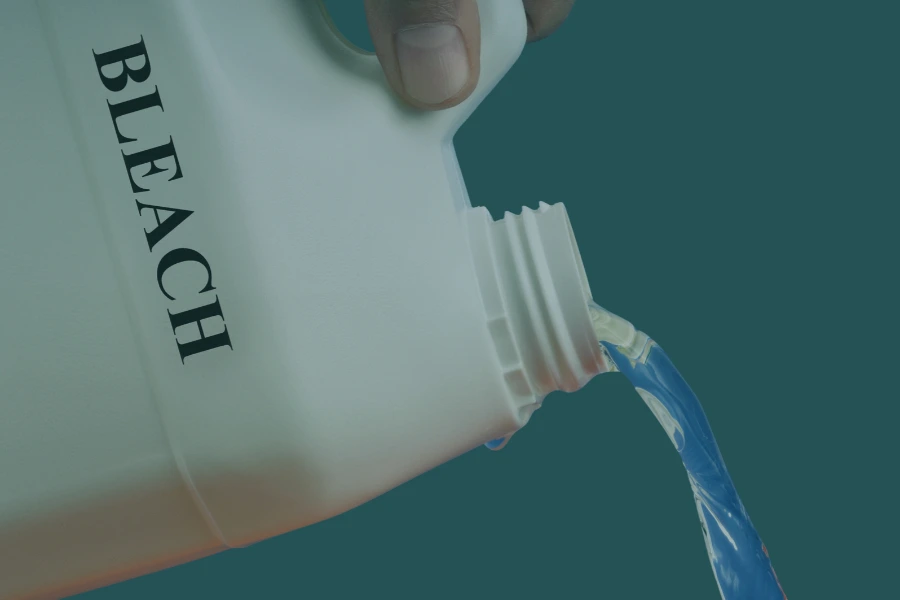
Bleach is widely used in households, healthcare facilities, restaurants, manufacturing plants, and commercial buildings. While it is commonly associated with cleaning and disinfection, certain bleach products can be corrosive, react dangerously with other chemicals, and require special disposal procedures.
However, not all bleach is considered hazardous waste. Its classification depends on the chemical ingredients, concentration, waste characteristics, contamination, and applicable environmental regulations.
HazWaste Environmental Inc helps businesses navigate hazardous waste disposal by reviewing chemical waste information, coordinating qualified service providers, and identifying appropriate treatment and disposal options.
Is Bleach Considered Hazardous Waste?
Bleach can qualify as hazardous waste under EPA regulations, but not every bleach product meets the federal definition.
Most traditional chlorine bleach contains sodium hypochlorite, a chemical used for cleaning, disinfecting, and industrial sanitation.
When discarded by a business, bleach may qualify as hazardous waste under the Resource Conservation and Recovery Act (RCRA), particularly if it meets the EPA’s corrosivity characteristic.
The classification depends on several factors:
- Household bleach: Generally excluded from federal RCRA hazardous waste requirements when generated as qualifying household waste.
- Industrial bleach: May qualify as hazardous waste because of its corrosive properties.
- Diluted bleach: Classification depends on the actual solution, its origin, and applicable regulations.
- Expired bleach: Not automatically hazardous simply because it is past its expiration date.
- Contaminated bleach: May require additional evaluation depending on the substances present.
An important distinction is that household hazardous waste exclusions are based on where and how the waste is generated. A business cannot automatically use the household exclusion simply because it purchases a consumer bleach product.
What Types of Bleach Are Considered Hazardous Waste?
Different bleach products contain different active ingredients and concentrations, which can affect their hazardous waste classification.
| Type of Bleach | Potential Hazardous Waste Status |
| Household chlorine bleach | Generally excluded from federal hazardous waste rules when generated by households |
| Industrial-strength chlorine bleach | May be hazardous because of corrosivity |
| Diluted bleach solutions | Depends on waste characteristics and how the material was generated |
| Expired bleach | Requires evaluation when discarded by a business |
| Oxygen bleach | Depends on ingredients, concentration, and waste properties |
| Contaminated bleach | May qualify as hazardous depending on the mixture |
Is Household Bleach Hazardous Waste?
Household chlorine bleach commonly contains sodium hypochlorite diluted in water. According to the CDC, many regular household bleach products contain approximately 5% to 9% sodium hypochlorite.
Under federal RCRA regulations, qualifying household-generated waste is excluded from hazardous waste regulation.
However, this exclusion does not mean household bleach is harmless or that it can be disposed of anywhere. State and local requirements may still apply.
Businesses using the same product must evaluate their discarded bleach under the regulations applicable to commercial waste generators.
Is Industrial Bleach Hazardous Waste?
Industrial bleach is commonly used for sanitation, water treatment, food processing, and manufacturing.
Some industrial sodium hypochlorite solutions contain higher concentrations of active ingredients than conventional household products.
These formulations may have highly alkaline properties and can present serious corrosion hazards.
When discarded, industrial bleach may qualify as hazardous waste if it meets EPA’s corrosivity criteria or another applicable hazardous waste requirement.
However, concentration alone does not determine the final classification.
Is Diluted Bleach Hazardous Waste?
Diluted bleach is not automatically exempt from hazardous waste regulations.
Adding water changes the concentration of sodium hypochlorite and may affect the solution’s pH and other chemical properties. However, the actual waste must still be evaluated under applicable requirements.
Businesses should not dilute hazardous waste simply to avoid regulatory classification. EPA generally requires hazardous waste determinations at the point of generation, before dilution or other alterations.
Is Expired Bleach Hazardous Waste?
Bleach gradually loses its disinfecting strength during storage as sodium hypochlorite decomposes.
However, an expired product does not automatically become hazardous waste simply because it is no longer effective for its intended use.
When a business discards expired bleach, it must consider the remaining ingredients, concentration, contamination, and applicable hazardous waste criteria.
Why Can Bleach Be Hazardous?
Bleach can create several chemical hazards during handling, storage, transportation, and disposal.
Corrosivity
Concentrated bleach solutions may damage skin, eyes, certain metals, and incompatible storage materials.
Many sodium hypochlorite products are alkaline, meaning they have a pH above 7. Some concentrated formulations have sufficiently high pH levels to meet EPA’s hazardous waste corrosivity characteristic when discarded.
However, pH and concentration must be evaluated using the applicable regulatory criteria rather than assumed from the product name alone.
Chemical Reactivity
Bleach can react dangerously with other chemicals, particularly certain cleaning products.
Examples include:
- Bleach and acids: Mixing these substances can release toxic chlorine gas.
- Bleach and ammonia: This combination can produce hazardous chloramine gases.
- Bleach and other cleaning products: Depending on their ingredients, mixtures can generate heat, harmful vapors, or other dangerous reactions.
The CDC warns against mixing bleach with other cleaners or disinfectants.
These hazards are important for workplace safety, but they do not automatically establish that a discarded bleach solution meets EPA’s D003 hazardous waste reactivity characteristic.
Environmental Concerns
Improperly managed bleach waste can affect wastewater systems and the environment.
Concentrated sodium hypochlorite solutions may interfere with biological wastewater treatment processes, damage incompatible materials, or create harmful chemical reactions.
The potential impact depends on the concentration, quantity, receiving environment, and other substances present.
What EPA Hazardous Waste Code Applies to Bleach?
There is no single EPA hazardous waste code that automatically applies to every bleach product.
When discarded, bleach may qualify as hazardous waste if it meets one or more applicable hazardous waste characteristics or listings.
D002: Corrosivity
The most relevant hazardous waste characteristic for many concentrated bleach solutions is D002, corrosivity.
Under 40 CFR § 261.22, an aqueous waste exhibits the corrosivity characteristic if its pH is:
- 2 or lower
- 12.5 or higher
Certain liquid wastes may also qualify if they corrode steel at a rate exceeding the EPA’s specified threshold.
Because sodium hypochlorite solutions can be highly alkaline, some discarded bleach products may meet the D002 criteria.
However, the presence of sodium hypochlorite does not automatically establish D002. The actual waste characteristics must be considered.
D003: Reactivity
D003 applies to wastes meeting EPA’s specific reactivity criteria.
Although bleach can react dangerously with acids, ammonia, and other substances, this does not automatically make every discarded bleach product a D003 hazardous waste.
A D003 classification requires evaluation against the regulatory definition rather than relying only on general chemical compatibility warnings.
Other Applicable Waste Codes
Bleach mixed with other chemicals or generated during industrial processes may require additional evaluation.
For example, a cleaning solution contaminated with certain solvents or other hazardous waste streams may present different regulatory considerations than unused sodium hypochlorite.
Businesses should consider the complete waste mixture, its source, and any applicable hazardous waste listings.
Is Bleach a Class 8 Corrosive Material?
Certain bleach solutions qualify as Class 8 corrosive materials under U.S. Department of Transportation regulations.
DOT Class 8 applies to substances that meet specified criteria for damaging human skin or corroding steel or aluminum during transportation.
This is different from EPA’s D002 hazardous waste classification.
A material can qualify as a DOT Class 8 corrosive without automatically meeting EPA hazardous waste criteria, and the reverse may also occur.
For more information, see our guide to Class 8 Corrosive Materials.
How Do You Determine if Bleach Is Hazardous Waste?
Businesses generating bleach waste must make an appropriate hazardous waste determination based on the material’s properties and applicable regulations.
The following steps can help organize the evaluation:
- Identify the product. Determine whether the bleach contains sodium hypochlorite, hydrogen peroxide, or another bleaching agent.
- Review the Safety Data Sheet (SDS). Look for information about the active ingredients, chemical concentration, pH, and potential hazards.
- Determine how the waste was generated. Identify whether the material is unused, expired, diluted, contaminated, or generated during an industrial process.
- Evaluate corrosivity. Determine whether the discarded solution meets EPA’s D002 criteria.
- Review chemical contamination. Identify any solvents, cleaning chemicals, or other waste streams that may have been mixed with the bleach.
- Determine whether testing is necessary. Analytical testing may be appropriate when product information and process knowledge are insufficient.
- Review state regulations. Some states establish hazardous waste requirements beyond federal regulations.
An SDS provides useful information about the original product, but it does not automatically establish the regulatory classification of the resulting waste.
How Should Businesses Dispose of Bleach?
Bleach disposal requirements depend on the product, quantity, concentration, contamination, and whether the waste is generated by a household or commercial operation.
Household Bleach Disposal
Household-generated bleach waste is generally excluded from federal hazardous waste regulations, but local disposal requirements may still apply.
Residents should follow the product label and applicable municipal waste management guidance.
Certain communities provide household hazardous waste collection programs for unwanted cleaning chemicals.
Household disposal options should not be assumed to apply to businesses.
Commercial and Industrial Bleach Disposal
Commercial bleach waste may be generated through:
- Janitorial and cleaning operations
- Hospitals and healthcare facilities
- Food processing and sanitation
- Manufacturing operations
- Textile processing
- Water treatment facilities
- Chemical inventory cleanouts
When discarded bleach qualifies as hazardous waste, applicable requirements may include compatible containers, proper labeling, generator documentation, transportation arrangements, and acceptance by an authorized receiving facility.
The appropriate management route depends on the waste’s classification and the requirements of the receiving facility.
Can Bleach Be Poured Down the Drain?
Businesses should not assume that bleach can be poured down the drain simply because it is diluted or commonly used for cleaning.
Commercial wastewater discharges may be subject to federal pretreatment regulations, local sewer limits, and facility-specific requirements.
Under 40 CFR § 403.5, discharges that cause interference with publicly owned treatment works or create certain safety and corrosion hazards are prohibited.
Before discharging bleach-containing waste, businesses should verify whether the specific discharge is authorized.
Bleach should never be mixed with other cleaning products or waste chemicals as a disposal method.
Can Bleach Be Neutralized Before Disposal?
Certain corrosive waste streams may be eligible for treatment or neutralization under applicable regulations.
However, neutralization is not appropriate for every bleach waste stream, and improperly mixing chemicals can create dangerous reactions.
The EPA provides specific regulatory provisions for qualifying elementary neutralization units, but those provisions do not authorize unrestricted chemical treatment or wastewater discharge.
Businesses should evaluate treatment options, applicable permits or exemptions, and receiving facility requirements before arranging disposal.
What Information Is Needed for Bleach Waste Disposal?
Businesses can simplify waste management planning by gathering relevant information before requesting disposal options.
Useful details include:
- Product name and manufacturer
- Safety Data Sheet
- Active chemical ingredients
- Estimated concentration
- Total quantity
- Container sizes and condition
- Available pH measurements
- Whether the material is unused, expired, or contaminated
- Known chemical mixtures
- Site location and access requirements
For example, a commercial facility may have several drums of expired industrial sodium hypochlorite solution remaining after a cleaning program or equipment change.
Before determining an appropriate waste management option, the material’s concentration, container condition, available analytical data, and potential contamination may need to be reviewed.
Frequently Asked Questions About Bleach Hazardous Waste
Is Clorox Bleach Hazardous Waste?
Household Clorox bleach is generally excluded from federal RCRA hazardous waste regulation when discarded as qualifying household waste. Commercial disposal depends on the actual product formulation, waste characteristics, and applicable regulations.
Is Sodium Hypochlorite Hazardous Waste?
Sodium hypochlorite solutions may qualify as hazardous waste when discarded if they meet EPA hazardous waste criteria, particularly the D002 corrosivity characteristic.
Is Expired Bleach Hazardous Waste?
Not automatically. Expiration does not determine hazardous waste classification. The discarded bleach must be evaluated based on its chemical properties, contamination, and applicable regulations.
Is Diluted Bleach Considered Hazardous Waste?
It depends on the waste’s composition, pH, origin, and contamination. Diluting bleach does not automatically eliminate hazardous waste requirements.
What Is the EPA Waste Code for Bleach?
D002 may apply when discarded bleach exhibits EPA’s corrosivity characteristic. Other hazardous waste codes may apply depending on the waste’s composition and how it was generated.
Is Bleach a Corrosive Material?
Certain bleach products are corrosive, particularly concentrated sodium hypochlorite solutions. The applicable regulatory classification depends on the material’s properties and relevant criteria.
Can You Pour Bleach Down the Drain?
Commercial bleach disposal through a drain depends on applicable wastewater regulations, local sewer authority requirements, and whether the discharge is authorized. Businesses should verify these requirements before disposing of bleach-containing waste.
Can You Mix Bleach With Other Cleaning Chemicals?
No. Mixing bleach with acids, ammonia, or other cleaning products can release harmful gases and create serious safety hazards.
Can HazWaste Help With Bleach Disposal?
Yes. HazWaste Environmental Inc helps businesses review bleach waste information, coordinate qualified service providers, and identify appropriate treatment and disposal options.
Conclusion
Bleach is not automatically hazardous waste, but concentrated, corrosive, or contaminated bleach solutions may require management under EPA hazardous waste regulations.
The classification depends on the actual formulation, concentration, waste characteristics, and whether the material was generated by a household or business. Proper identification helps determine appropriate storage, transportation, treatment, and disposal requirements.
HazWaste Environmental Inc supports businesses with hazardous chemical waste disposal solutions by coordinating qualified service providers, reviewing waste classifications, and identifying appropriate treatment and disposal facilities.