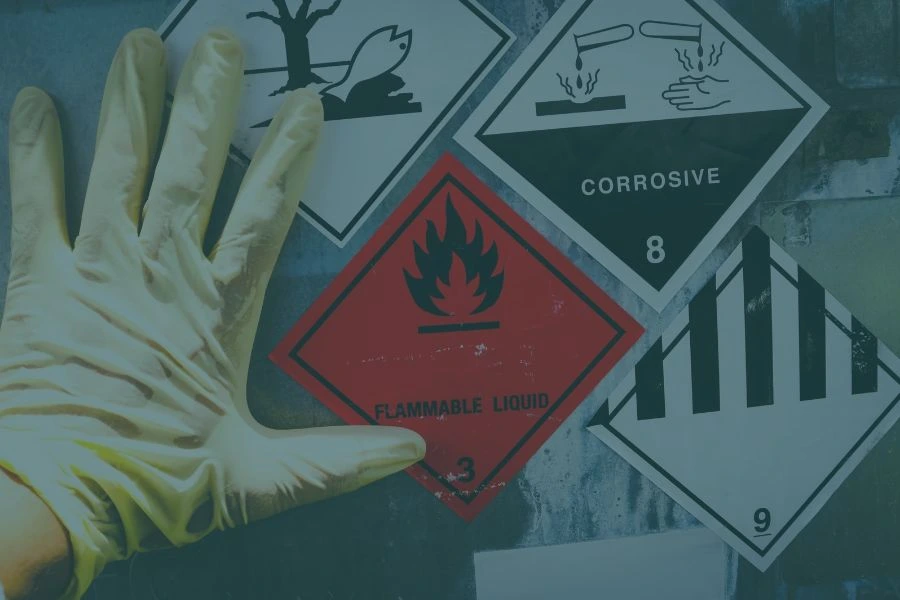
Corrosive chemicals are found in many everyday business operations, from industrial cleaning and manufacturing to laboratory testing and equipment maintenance. Materials such as sulfuric acid, sodium hydroxide, and certain chemical cleaning solutions can cause serious damage when improperly stored or handled.
The U.S. Department of Transportation (DOT) identifies certain corrosive substances as Class 8 hazardous materials because of the risks they present during transportation. When these chemicals become waste, businesses may also need to follow Environmental Protection Agency (EPA) hazardous waste regulations.
HazWaste Environmental Inc helps businesses navigate hazardous waste disposal by reviewing corrosive waste information, coordinating qualified service providers and transporters, and identifying practical treatment and disposal options.
Quick Answer: What Are Class 8 Corrosive Materials?
Class 8 corrosive materials are liquids or solids that meet DOT criteria for causing irreversible skin damage or significant corrosion of steel or aluminum.
Under 49 CFR § 173.136, materials may qualify as Class 8 based on their effects on living tissue or their ability to corrode certain metals.
Common examples include:
- Sulfuric acid
- Hydrochloric acid
- Nitric acid
- Sodium hydroxide
- Potassium hydroxide
- Certain industrial cleaning solutions
- Some battery electrolytes
However, not every product containing an acid or base automatically qualifies as Class 8. Its concentration, formulation, chemical properties, and applicable regulatory criteria all matter.
What Makes a Material Corrosive?
Corrosive materials can damage living tissue, metals, and other surfaces through chemical reactions. Two common categories are acids and bases, although other chemicals can also exhibit corrosive properties.
Acids
Acids are substances that can donate hydrogen ions during chemical reactions. Many strong or concentrated acids can cause chemical burns, damage equipment, and corrode certain metals.
Examples include:
- Sulfuric acid: Used in lead-acid batteries, chemical manufacturing, and industrial processing.
- Hydrochloric acid: Used in metal cleaning, chemical production, and surface treatment.
- Nitric acid: Used in laboratories, chemical manufacturing, and industrial applications.
The severity of an acid’s corrosive properties depends on factors such as concentration, chemical composition, and the material it contacts.
Bases
Bases, also called alkaline substances, can be just as corrosive as acids.
Strong bases may break down fats and proteins in living tissue, creating serious chemical burn hazards.
Common examples include sodium hydroxide, which is used in industrial cleaning and manufacturing, and potassium hydroxide, which is found in chemical processing and certain battery applications.
Is pH Enough to Determine Corrosivity?
No. Although pH helps indicate how acidic or alkaline a solution is, it does not determine DOT Class 8 classification on its own.
Other considerations include:
- Chemical concentration
- Composition and formulation
- Skin corrosion test data
- Corrosion rates on steel or aluminum
- Applicable DOT classification criteria
This distinction is important because DOT’s Class 8 requirements are different from the EPA’s hazardous waste corrosivity characteristic, known as D002.
Common Examples of Class 8 Corrosive Materials
Class 8 materials are found in many commercial and industrial settings. Some are used in manufacturing, while others appear in maintenance operations, laboratories, batteries, and cleaning products.
| Material | Common Applications |
| Sulfuric acid | Battery electrolytes, chemical manufacturing |
| Hydrochloric acid | Metal cleaning, chemical processing |
| Nitric acid | Chemical manufacturing, laboratories |
| Sodium hydroxide | Industrial cleaning, manufacturing |
| Potassium hydroxide | Chemical processing, battery applications |
| Certain sodium hypochlorite solutions | Industrial cleaning and disinfection |
| Certain battery electrolytes | Lead-acid batteries and industrial equipment |
A material’s presence on this list does not mean every concentration or formulation is automatically regulated as Class 8.
For example, the corrosive properties of a concentrated industrial cleaning solution may differ significantly from those of a diluted product containing the same chemical.
Businesses should use reliable chemical information and applicable DOT regulations to establish the correct classification.
Understanding Class 8 Packing Groups
The DOT assigns Class 8 corrosive materials to packing groups based on the severity of their hazards.
These groups help determine appropriate packaging requirements during transportation.
Packing Group I: High Danger
Packing Group I applies to materials that cause irreversible damage to intact skin after very short exposure under specified testing conditions.
These substances present the highest level of danger within the Class 8 packing group system.
Packing Group II: Medium Danger
Packing Group II covers materials that cause irreversible skin damage after longer exposure than Packing Group I materials.
Although classified as medium danger, these substances still present significant corrosion hazards and require appropriate transportation controls.
Packing Group III: Lower Danger
Packing Group III applies to materials that meet less severe skin corrosion criteria or certain metal corrosion criteria.
These materials may cause irreversible skin damage after longer exposure or corrode steel or aluminum at rates exceeding specified limits.
| Packing Group | Danger Level | General Classification |
| I | High | Severe skin corrosion after very short exposure |
| II | Medium | Skin corrosion after intermediate exposure |
| III | Lower | Skin corrosion after longer exposure or qualifying metal corrosion |
All three packing groups represent regulated hazards. A Packing Group III designation does not mean a chemical is harmless.
The specific assignment criteria are established under 49 CFR § 173.137.
How Should Class 8 Corrosive Materials Be Stored?
Proper storage helps prevent leaks, chemical reactions, container damage, and accidental exposure.
Because corrosive materials vary significantly, storage arrangements should be based on the specific chemical and its compatibility with surrounding materials.
Important practices include:
- Use compatible containers: Choose containers appropriate for the chemical’s corrosive properties.
- Maintain clear labels: Identify the material and applicable hazards.
- Inspect containers: Check for leaks, deterioration, corrosion, or other damage.
- Separate incompatible chemicals: Avoid storing substances together when accidental mixing could create dangerous reactions.
- Use secondary containment when required: Follow applicable facility and environmental regulations.
- Maintain spill response procedures: Ensure appropriate procedures and resources are available for the materials present.
- Review applicable regulations: Consider workplace safety, fire code, environmental, and hazardous waste requirements.
There is no single container or storage cabinet suitable for every Class 8 substance. A material that is compatible with one type of plastic or metal may damage another.
Why Should Acids and Bases Be Separated?
Certain acids and bases can react strongly when mixed, generating heat, splashing, or releasing hazardous vapors.
For example, accidentally combining incompatible cleaning chemicals may create dangerous conditions even when the individual products are commonly used at the facility.
However, chemical compatibility involves more than simply separating everything labeled acidic from everything labeled alkaline.
Safety Data Sheets (SDS), chemical compatibility information, and facility-specific procedures can help determine appropriate storage arrangements.
How Are Class 8 Corrosive Materials Transported?
Transporting Class 8 materials requires following applicable DOT hazardous materials regulations.
The requirements depend on the specific substance, its concentration, packing group, quantity, packaging, and transportation circumstances.
Important considerations include:
- Proper shipping names and identification numbers: Identifying the material using the applicable DOT shipping description.
- Packing groups: Determining the severity of the corrosive hazard.
- Compatible packaging: Selecting packaging that meets the applicable transportation requirements.
- Hazard labels and placards: Communicating the material’s risks during transportation.
- Shipping papers: Providing the required shipment information.
- Transporter qualifications: Confirming that the transportation arrangements meet applicable requirements.
- Transportation restrictions: Reviewing any special provisions, limitations, or segregation requirements.
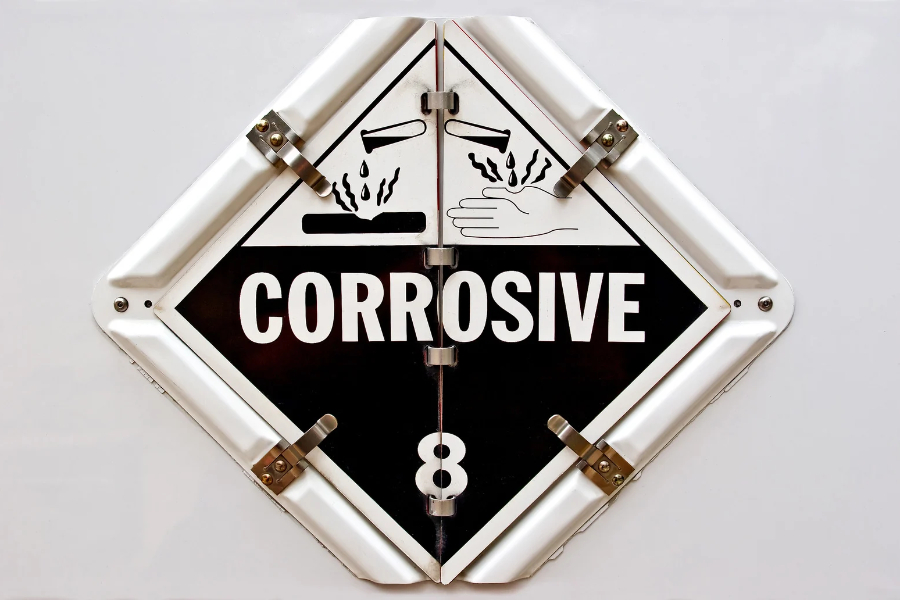
The standard Class 8 corrosive label is a black-and-white diamond showing liquid from two test tubes damaging a hand and a metal surface.
Not every shipment requires the same packaging or vehicle placarding. The applicable requirements must be determined from the material’s classification and shipment details.
Are Class 8 Corrosives Considered Hazardous Waste?
Not automatically. Class 8 is a DOT transportation classification, while hazardous waste is identified under EPA regulations.
A chemical may qualify as Class 8 during transportation without necessarily being considered hazardous waste under the Resource Conservation and Recovery Act (RCRA).
However, when a corrosive material is discarded, it may meet EPA’s D002 corrosivity characteristic.
Under 40 CFR § 261.22, certain aqueous wastes qualify as corrosive hazardous waste when their pH is:
- 2 or lower
- 12.5 or higher
Certain liquids may also qualify based on their ability to corrode steel at a specified rate.
For example, an industrial facility may use a concentrated acidic solution that qualifies as a DOT Class 8 material. When the solution becomes waste, the facility must separately determine whether it meets EPA hazardous waste requirements.
The two classifications can overlap, but they use different criteria and serve different regulatory purposes.
For a broader explanation of EPA’s system, see our EPA Hazmat Classifications Guide.
What Information is Needed for Corrosive Waste Disposal?
Before arranging corrosive waste removal, businesses should gather available information about the material and how it was generated.
Useful details include:
- Chemical name or product identification
- Safety Data Sheet (SDS)
- Estimated quantity
- Chemical concentration
- Physical state
- Available pH measurements or analytical results
- Container type and condition
- Known contamination
- Process that generated the waste
- Site access and pickup requirements
For example, a laboratory preparing for a cleanout may have several containers of expired acids, alkaline cleaning solutions, and unidentified chemical mixtures.
Although multiple containers may contain corrosive materials, they may require different waste classifications, packaging arrangements, and receiving facility approvals.
Unknown or mixed chemicals may need additional evaluation before an appropriate transportation or disposal route can be identified.
Frequently Asked Questions About Class 8 Corrosive Materials
What Does Class 8 Mean for Hazardous Materials?
Class 8 identifies materials that meet DOT criteria for causing irreversible skin damage or significant corrosion of steel or aluminum during transportation.
What Are Examples of Class 8 Corrosive Materials?
Examples include certain concentrations of sulfuric acid, hydrochloric acid, nitric acid, sodium hydroxide, potassium hydroxide, and industrial cleaning solutions. Classification depends on the material’s specific properties and formulation.
Are All Acids Considered Class 8?
No. Not every acid meets DOT Class 8 criteria. Classification depends on factors such as concentration, chemical composition, skin corrosion data, and applicable regulatory requirements.
Is Bleach a Class 8 Corrosive Material?
Some concentrated sodium hypochlorite solutions may qualify as Class 8 corrosive materials. The classification depends on the product’s formulation, concentration, and available hazard information.
What Is the Class 8 Hazard Symbol?
The DOT Class 8 symbol is a black-and-white diamond showing liquid from two test tubes damaging a hand and a metal surface. The number 8 appears at the bottom of the label.
What Is the Difference Between Class 8 and D002?
Class 8 is a DOT transportation classification for corrosive materials. D002 is an EPA hazardous waste code assigned to wastes that meet the federal corrosivity characteristic.
Can Class 8 Materials Be Transported With Other Chemicals?
It depends on the chemicals involved and applicable packaging, compatibility, segregation, and transportation requirements. Certain materials must be separated to prevent dangerous reactions.
Can HazWaste Help With Corrosive Waste Disposal?
Yes. HazWaste Environmental Inc helps businesses review corrosive waste information, coordinate qualified transporters and service providers, and identify appropriate treatment and disposal options based on the material and project requirements.
Conclusion
Class 8 corrosive materials are substances that meet DOT criteria for causing serious skin damage or significant corrosion of certain metals. Common examples include strong acids, bases, industrial cleaning chemicals, and some battery-related materials.
Understanding these classifications helps businesses recognize potential risks and determine the appropriate storage, packaging, labeling, and transportation requirements.
It is also important to distinguish DOT Class 8 classifications from EPA hazardous waste regulations. A material may be regulated under one or both systems, depending on its properties and whether it is being discarded.
HazWaste Environmental Inc supports businesses with corrosive hazardous waste disposal solutions by coordinating qualified service providers, reviewing treatment options, and helping organize transportation and documentation requirements.