Hazardous materials and hazardous waste come in many forms, from industrial solvents and corrosive chemicals to contaminated materials, unused laboratory chemicals, and manufacturing byproducts. While some hazards are easy to recognize, others require a closer look at the material’s composition, how it was used, and where it came from.
The Environmental Protection Agency (EPA) classifies hazardous waste based on specific regulatory criteria, while the Department of Transportation (DOT) uses a separate system to identify hazards during transportation. Understanding both systems helps businesses recognize potential risks, meet regulatory requirements, prepare documentation, and identify appropriate waste management options.
HazWaste Environmental Inc helps businesses navigate hazardous waste disposal needs by reviewing waste information, coordinating qualified service providers, and identifying practical transportation, treatment, and disposal options.
What Are EPA Hazmat Classifications?
EPA hazardous waste classifications identify materials that must be managed under federal hazardous waste regulations. Under the Resource Conservation and Recovery Act (RCRA), hazardous waste is primarily identified through two categories:
- Listed hazardous waste: Waste specifically identified on the EPA’s F, K, P, or U hazardous waste lists.
- Characteristic hazardous waste: Waste that exhibits one or more regulated hazardous characteristics: ignitability, corrosivity, reactivity, or toxicity.
These classifications are established under 40 CFR Part 261, which outlines how hazardous waste is identified and regulated.
It is important to understand that EPA hazardous waste classifications are different from DOT hazard classes. EPA classifications determine whether a discarded material is regulated as hazardous waste under RCRA, while DOT classifications address the hazards materials present during transportation.
A material can fall under both systems, but the requirements and purposes are not identical.
The Four Characteristics of Hazardous Waste
Not every hazardous waste appears on an EPA list. Some materials are classified as hazardous because they exhibit specific physical or chemical properties that create risks to human health or the environment.
The EPA identifies four hazardous waste characteristics.
1. Ignitability (D001)
Ignitable waste can catch fire under certain conditions. These materials may produce flammable vapors, ignite at relatively low temperatures, or create fire hazards during storage and handling.
Common examples may include:
- Certain spent solvents
- Alcohol-containing waste
- Flammable industrial liquids
- Some paints and coating materials
For many liquid wastes, a flash point below 140°F (60°C) is a key regulatory criterion, although other conditions and exceptions apply.
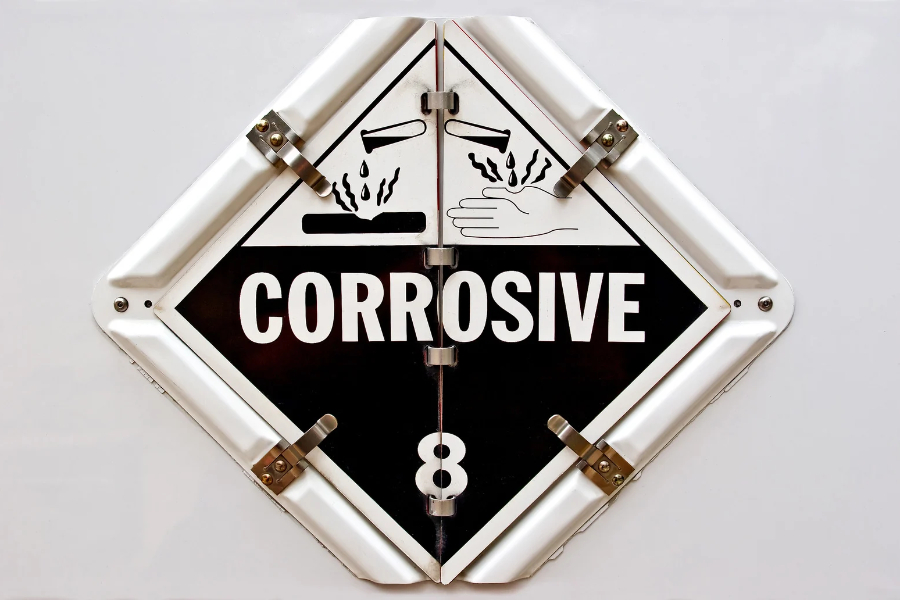
2. Corrosivity (D002)
Corrosive waste can damage materials or react aggressively with certain surfaces. It often includes highly acidic or alkaline liquids.
Examples may include:
- Certain acid solutions
- Caustic cleaning chemicals
- Industrial chemical waste
- Some metal treatment solutions
Under federal hazardous waste rules, certain aqueous wastes with a pH of 2 or lower, or 12.5 or higher, meet the corrosivity characteristic. Some liquids may also qualify based on their ability to corrode steel.
3. Reactivity (D003)
Reactive waste may become unstable, react dangerously with water, generate toxic gases, or create explosion hazards under certain conditions.
Examples may include:
- Certain water-reactive materials
- Some cyanide-bearing wastes
- Certain sulfide-bearing wastes
- Unstable chemical residues
Reactivity is particularly important when reviewing chemical mixtures, unidentified materials, and laboratory waste. Materials that appear stable on their own may create serious hazards when mixed with incompatible substances.
4. Toxicity (D004–D043)
Toxic hazardous waste contains certain regulated contaminants at concentrations that meet EPA’s toxicity characteristic criteria.
Common contaminants of concern include:
- Lead
- Mercury
- Cadmium
- Arsenic
- Certain regulated organic chemicals
The EPA commonly evaluates this characteristic using the Toxicity Characteristic Leaching Procedure (TCLP), which assesses whether regulated contaminants could leach from waste under specified testing conditions.
An important distinction: A material is not automatically classified as hazardous simply because it appears dangerous. Hazardous waste determinations must be based on the applicable regulatory definitions, waste characteristics, and listing criteria.
Understanding EPA’s Four Hazardous Waste Lists
In addition to characteristic hazardous waste, the EPA identifies specific hazardous wastes through four lists: F, K, P, and U.
These lists are especially relevant for manufacturing facilities, laboratories, chemical processing operations, industrial sites, and businesses managing expired or unused chemical inventories.
F-Listed Waste: Non-Specific Sources
F-listed wastes originate from certain industrial processes that occur across different industries. They are called non-specific source wastes because the same processes may generate hazardous waste at many types of facilities.
Examples include:
- Certain spent solvents
- Electroplating wastes
- Metal finishing wastes
- Certain industrial wastewater treatment residues
The F001 through F005 waste codes commonly apply to specific spent solvents and solvent mixtures when the applicable listing conditions are met.
For example, spent acetone, methanol, toluene, or other industrial solvents may require an F-list review depending on how the solvent was used and the regulatory description.
K-Listed Waste: Specific Industries
K-listed wastes come from specific industrial sources and manufacturing processes identified by the EPA.
Industries with potentially applicable K-listed wastes include:
- Petroleum refining
- Pesticide manufacturing
- Wood preservation
- Organic chemical manufacturing
- Certain metal production operations
Unlike F-listed wastes, K-listed wastes are tied to particular industries and processes.
However, a waste does not automatically become K-listed simply because it came from one of these industries. The material must match the specific waste description established by the EPA.
P-Listed Waste: Acutely Hazardous Chemicals
P-listed wastes generally include certain discarded commercial chemical products classified as acutely hazardous.
Examples include:
- Sodium azide
- Sodium cyanide
- Acrolein
- Certain highly hazardous pesticides
These materials may be encountered in laboratories, research facilities, chemical stockrooms, and industrial operations.
Because P-listed wastes are classified as acutely hazardous, even relatively small amounts can have important implications for hazardous waste generator status, accumulation requirements, and disposal planning.
U-Listed Waste: Hazardous Commercial Chemical Products
U-listed wastes generally include certain discarded unused commercial chemical products that meet EPA listing requirements.
Examples include:
- Acetone
- Benzene
- Chloroform
- Formaldehyde
- Toluene
U-listed wastes may arise when businesses discard expired chemicals, unused reagents, off-specification products, or outdated chemical inventory.
The chemical name alone does not automatically determine whether the material is U-listed. The waste must meet the applicable commercial chemical product criteria, which can depend on whether the material is unused, its formulation, and the circumstances of disposal.
What Are the Nine DOT Hazard Classes?
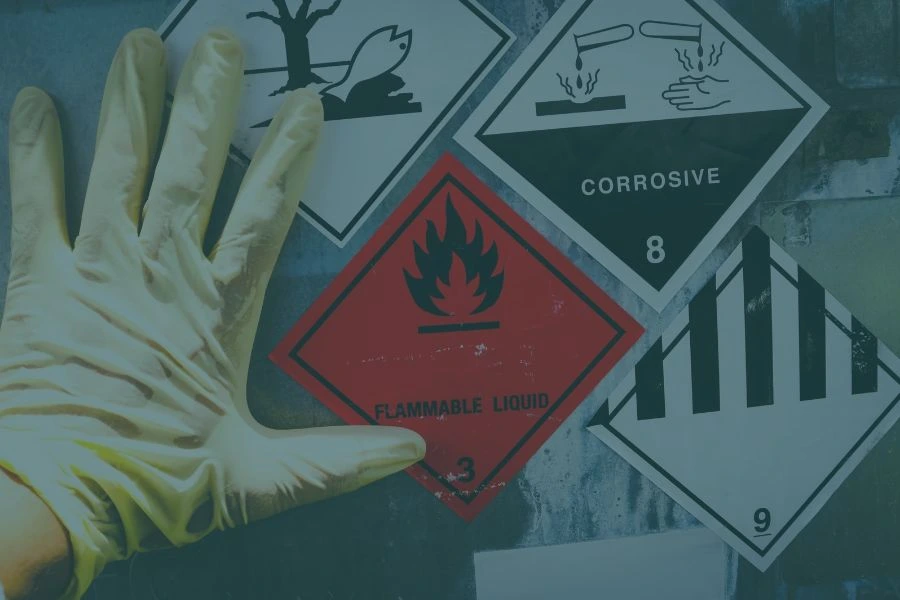
The Department of Transportation uses nine hazard classes to identify the risks associated with hazardous materials during transportation.
Unlike the EPA’s hazardous waste lists and characteristics, DOT hazard classes focus on risks during shipment, such as flammability, explosion, toxicity, corrosion, and radioactivity.
| Class | Hazard Type | Examples |
| 1 | Explosives | Certain explosive materials |
| 2 | Gases | Propane and compressed gases |
| 3 | Flammable liquids | Gasoline and acetone |
| 4 | Flammable solids and reactive materials | Certain reactive solids |
| 5 | Oxidizers and organic peroxides | Certain oxidizing chemicals |
| 6 | Toxic and infectious substances | Certain poisons and infectious materials |
| 7 | Radioactive materials | Regulated radioactive substances |
| 8 | Corrosive materials | Certain acids and caustics |
| 9 | Miscellaneous hazardous materials | Certain lithium batteries and other regulated materials |
These classifications help determine applicable shipping descriptions, packaging, labels, placards, shipping papers, and transportation requirements.
For example, an industrial solvent may require evaluation under EPA hazardous waste regulations when discarded, while its DOT transportation classification may identify it as a flammable liquid.
A material can be regulated under DOT transportation rules without necessarily being an EPA-regulated hazardous waste. Likewise, hazardous waste may also be subject to DOT requirements when transported.
Businesses should review both systems when arranging shipments of regulated materials.
What About Universal Waste?
Universal waste is a category of certain commonly generated hazardous wastes that can be managed under streamlined federal regulations.
The EPA identifies five federal universal waste categories:
- Batteries
- Pesticides
- Mercury-containing equipment
- Lamps
- Aerosol cans
Universal waste regulations are established under 40 CFR Part 273.
These rules are designed to encourage proper collection and recycling while reducing some of the regulatory burden associated with managing common hazardous waste materials.
However, universal waste is still regulated, and businesses must follow applicable storage, labeling, accumulation, handling, and transportation requirements. States may also establish additional requirements or recognize additional universal waste categories.
For a closer look at these materials, read our What Is Universal Waste? A Complete Guide.
Why Proper Hazardous Waste Classification Matters
Correct hazardous waste classification helps businesses understand how regulated materials should be stored, documented, transported, and routed for appropriate treatment, recycling, or disposal.
Classification can influence several important areas:
- Storage and containers: Certain materials require specific containers, storage conditions, or separation from incompatible waste.
- Waste labeling: Containers may need appropriate hazardous waste markings and identification information.
- Waste profiles and documentation: Receiving facilities may require waste codes, chemical information, process descriptions, or analytical data.
- Generator responsibilities: The type and quantity of hazardous waste generated can affect regulatory obligations.
- Packaging and transportation: Material characteristics and DOT classifications can influence shipping requirements.
- Treatment and disposal options: Not every facility can accept every hazardous waste stream.
- Receiving facility acceptance: Accurate waste information helps reduce shipment delays and rejected loads.
Consider a laboratory preparing for a facility cleanout. It may have spent solvents, unused reagents, corrosive chemicals, and containers with missing labels.
Although these materials are stored in the same laboratory, they may require different waste codes, packaging arrangements, documentation, and receiving facilities.
Without an accurate review, the project could experience delays, additional expenses, rejected shipments, or compliance problems.
This is why businesses should gather available SDS sheets, chemical inventories, container information, analytical reports, and details about how the waste was generated before arranging disposal.
Frequently Asked Questions About Hazmat Classifications
What are the main EPA hazardous waste classifications?
The EPA primarily identifies hazardous waste through listed wastes and characteristic wastes. Listed wastes appear on the F, K, P, or U lists, while characteristic wastes exhibit ignitability, corrosivity, reactivity, or toxicity.
What are the four characteristics of hazardous waste?
The four characteristics are ignitability, corrosivity, reactivity, and toxicity. Materials that meet the applicable regulatory criteria for one or more of these characteristics may be classified as hazardous waste.
What is the difference between F-listed and K-listed waste?
F-listed wastes come from certain non-specific industrial processes that can occur across multiple industries. K-listed wastes originate from specifically identified industrial sources and processes.
What is the difference between P-listed and U-listed waste?
Both lists generally cover certain discarded commercial chemical products. P-listed wastes are classified as acutely hazardous, while U-listed wastes are hazardous but do not have the same acute designation.
Are EPA hazardous waste classifications the same as DOT hazard classes?
No. EPA classifications identify hazardous waste under RCRA, while DOT hazard classes identify risks associated with materials during transportation. A material may be subject to both systems.
Can a waste have more than one hazardous waste code?
Yes. A waste can meet multiple hazardous waste listings, exhibit more than one hazardous characteristic, or be both listed and characteristic. The applicable codes depend on its composition, origin, and regulatory criteria.
Can HazWaste help with hazardous waste disposal?
HazWaste Environmental Inc helps businesses review waste information, coordinate qualified service providers, and identify practical treatment, recycling, transportation, and disposal options based on project requirements.
Conclusion
Understanding EPA hazmat classifications starts with identifying whether a waste appears on the F, K, P, or U lists, exhibits one of the four hazardous characteristics, or qualifies for a special management category such as universal waste.
Businesses should not rely on chemical names, container appearance, or assumptions alone. How the waste was generated, its composition, whether it is spent or unused, and the applicable regulations all play a role in determining the correct classification.
For businesses navigating complex waste classifications, HazWaste Environmental Inc provides hazardous waste removal and disposal coordination support through qualified transporters, approved service providers, and appropriate receiving facilities.